Bioidentical Hormones for Hair Loss
.jpg&w=64&q=75)

Your hair follicle is like a tiny hormone factory that responds to changes in your body. Whether your hormone levels change naturally or you're taking bioidentical hormones, your hair reacts to it. And it's not just hormones that play a role; minerals and vitamins (co-factors) are important too.
Interestingly, the same hormone receptors involved in acne also influence hair development. If you had acne during adolescence, there's a high probability that you'll deal with hair loss later in life if you don't get your hormonal balance under control. Usually, this involves too much testosterone (typically an excess of androgens or their metabolites) or the breakdown product DHT (dihydrotestosterone).
Causes of Hormone-Related Hair Loss
Hormones are the secret directors of your body and also have a major influence on your hair. The treatment method for hair loss can differ depending on the underlying cause.
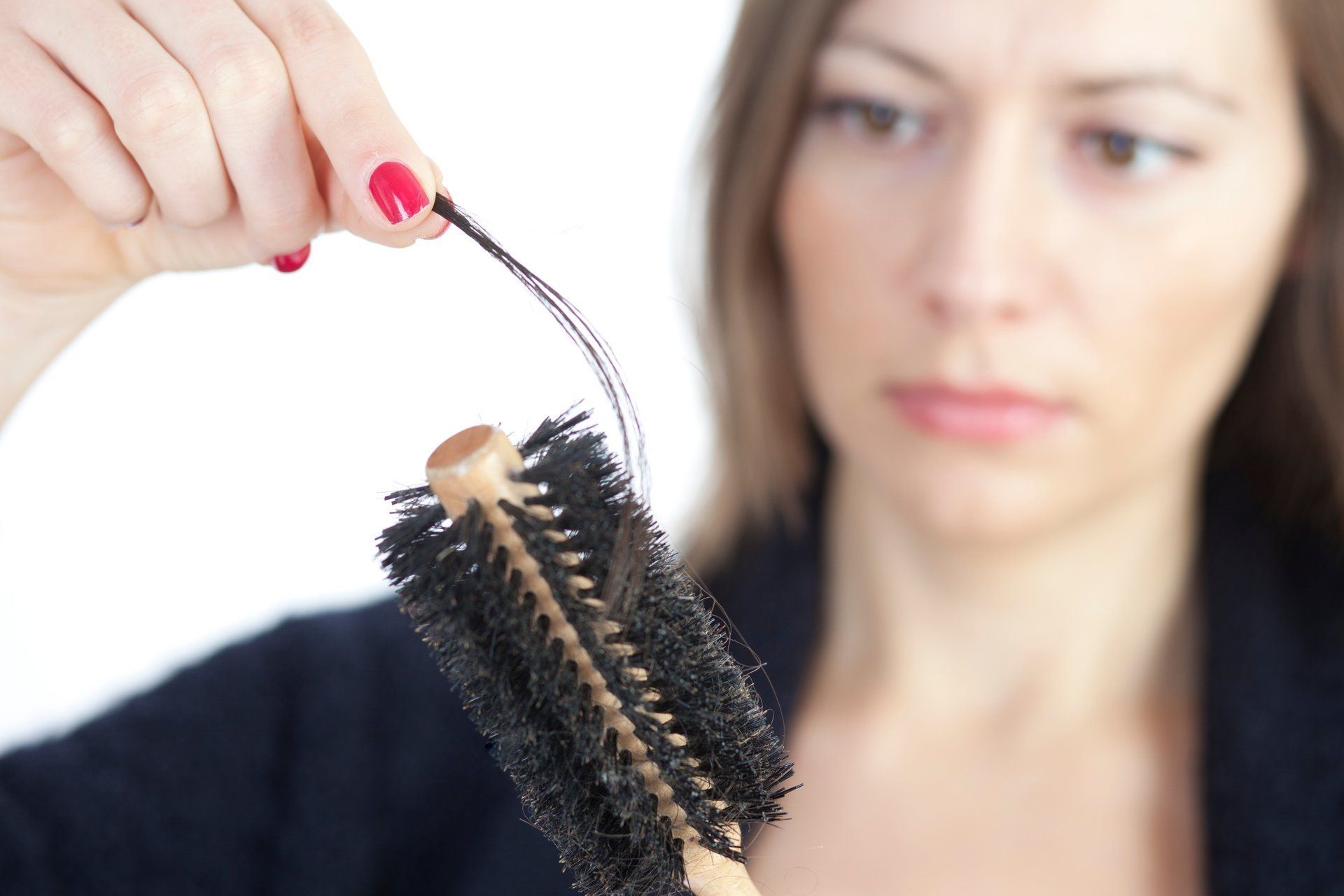
Hypothyroidism
Another hormonal cause of hair loss, primarily common in young women, is hypothyroidism. This can be directly triggered by a hormonal imbalance, such as an excess of estrogen or a deficiency in progesterone. Indirectly, iron deficiency can also play a role, often caused by heavy menstrual bleeding, which in turn is related to hormone balance. This is also known as anemia due to excessive menstrual blood loss. Both factors can damage the thyroid and thus lead to hair loss.
In such cases, hormone therapy with bioidentical hormones can be an effective solution to restore hormonal balance and counteract hair loss.
Menopause in Women
During menopause, many women experience hormonal changes that can affect hair growth. A decline in estrogen and thyroid hormone is often the cause of hair becoming thinner, dry, and gray. From a clinical perspective, the scalp becomes clearly visible, especially on the upper part of the head where the hair thins.

Interesting: In post-menopause, women can also develop increased facial hair, an indication of a relative testosterone excess combined with a deficiency in estrogen and progesterone.
Andropause in Men
Men are also affected by hormone-related hair loss during andropause. Both head and body hair can become thinner and turn gray. Among other things, the restoration of testosterone through bioidentical hormones slows down this process.
Treatment through Hair Transplantation
A well-known example of treatment is hair implantation in men. Hormone-resistant hair is taken from the back of the head and implanted in areas (e.g., crown or frontal) that are particularly susceptible to hormone-related hair loss. These newly implanted hairs are less dependent on testosterone and DHT (dihydrotestosterone), so they not only grow in the new location but can also regenerate themselves.
Therapeutic Approach with Bioidentical Hormone Therapy
Bioidentical hormones can be a meaningful therapy in both life phases. The approach is based on comprehensive laboratory analyses of relevant hormones and other indicators such as TSH, fT3, fT4, and ferritin. Depending on the findings, hormone deficiencies can be balanced with bioidentical hormones, or excesses can be regulated through dietary changes and natural methods.
How Estrogen and Progesterone Influence the Hair Cycle
Hair growth follows cyclical phases, and the length of the anagen phase, the active growth phase, is decisive for hair density and thickness. Estrogens prolong this phase and help stabilize follicular activity. When estrogen levels decline, as commonly occurs during menopause, the growth phase shortens. A greater proportion of hairs transition prematurely into the resting phase, which can present clinically as diffuse thinning.
Progesterone acts as a natural counterbalance to androgens. It may inhibit the activity of 5-alpha-reductase, the enzyme that converts testosterone into the more potent dihydrotestosterone. In susceptible follicles, DHT shortens the growth phase and promotes follicular miniaturization. An imbalance between estrogen, progesterone, and androgens can therefore have a sustained impact on hair structure and density.
Which Laboratory Parameters Should Be Assessed Before Initiating Therapy?
Prior to initiating bioidentical hormone therapy, a structured laboratory evaluation is recommended to distinguish hormonal from non-hormonal causes of hair loss. In addition to a thorough clinical history, the following parameters are advisable:
- Ferritin
- Vitamin D
- Vitamin B complex
- Zinc
- TSH
- fT3
- fT4
- Estradiol
- Progesterone
- Testosterone
These baseline values help identify thyroid dysfunction, micronutrient deficiencies, or hormonal imbalances and allow for targeted therapeutic planning.
Key Nutrients for Hair Growth
Beyond hormonal regulation, specific micronutrients play an essential role in follicular function. Iron deficiency, particularly when ferritin levels are low, is a common contributor to diffuse hair loss, as iron is required for cellular proliferation within the hair matrix. Zinc is also essential for keratin synthesis and follicular regeneration.
Biotin, as part of the vitamin B complex, supports keratin structure, while selenium contributes to antioxidant defense mechanisms and influences thyroid function. Hormone therapy can only reach its full therapeutic potential when relevant micronutrient deficiencies are identified and corrected concurrently.
- Example: A 52-year-old patient presented with progressive diffuse thinning at the vertex over a two-year period. Laboratory testing revealed a relative progesterone deficiency in early menopause as well as reduced ferritin levels. Following individualized adjustment with bioidentical progesterone and concurrent iron supplementation, hair shedding stabilized significantly within six months. This case illustrates the importance of combining endocrine and internal medical evaluation.

How Dr. Wilden applies bioidentical hormone therapy can be found in our overview: "Hormone Therapy with Bioidentical Hormones."
.jpg&w=640&q=75)
Isabella Wilden
Dr. Isabella Wilden is a dedicated physician from Germany who became an expert in bioidentical hormones following her own health challenges. With the goal of inspiring others, she shares her journey from chronic illness to restored health and today offers her expertise to help other women facing similar issues.
Frequently Asked Questions & Answers
What role does testosterone play in male hair loss?
Testosterone and its derivative DHT (dihydrotestosterone) are often the main causes of male hair loss. DHT can cause hair follicles to shrink, which shortens the hair growth cycle and leads to thinning and ultimately hair loss.
How do I distinguish whether my hair loss is hormonal or caused by iron deficiency?
Hormonal hair loss typically shows a pattern. In men, this manifests as thinning of the hair at the crown, which can progress to baldness. Hair loss due to thyroid problems or iron deficiency usually appears diffuse and affects all areas of the head.
What therapeutic approaches are there for hormonal hair loss during menopause?
During menopause, hair loss can often be caused by a decrease in estrogen and thyroid hormones. One possible therapy is the use of bioidentical hormones, based on laboratory analyses.
How is hormonal hair loss diagnosed?
The diagnosis is based on a combination of symptoms and laboratory analyses. The hormones to be tested usually include estrogen, progesterone, testosterone, free testosterone, TSH, fT3, fT4, and others, depending on the symptoms.